How Each Model Moves Produce Out of the Cooler
Every CSA model comes down to how produce moves from farm to member. The way you structure your shares determines what leaves your cooler, what stays behind, and when you get paid. Knowing the mechanics helps you plan both harvest and staffing.
Fixed Box: Prepacked, Predictable Outflow
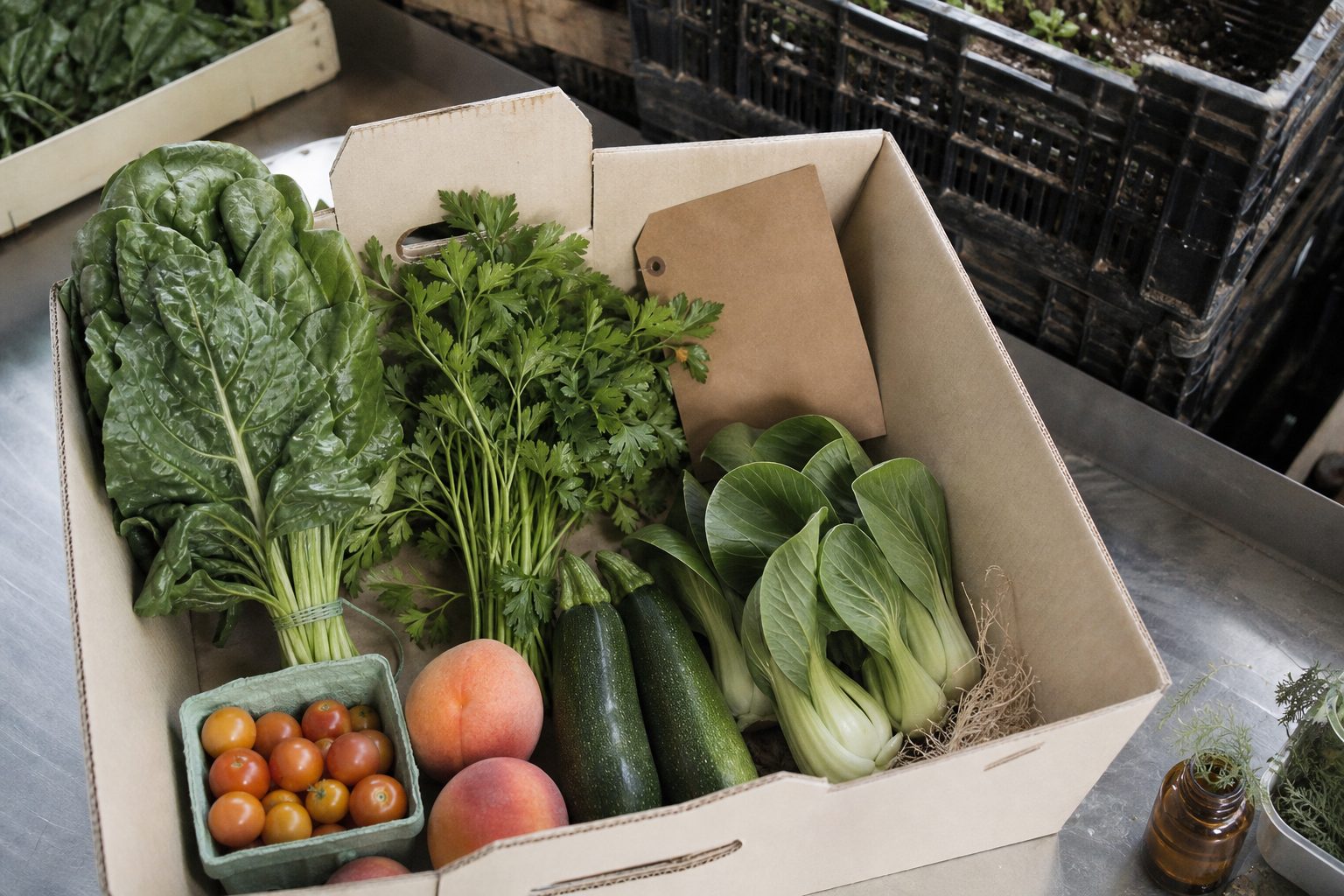
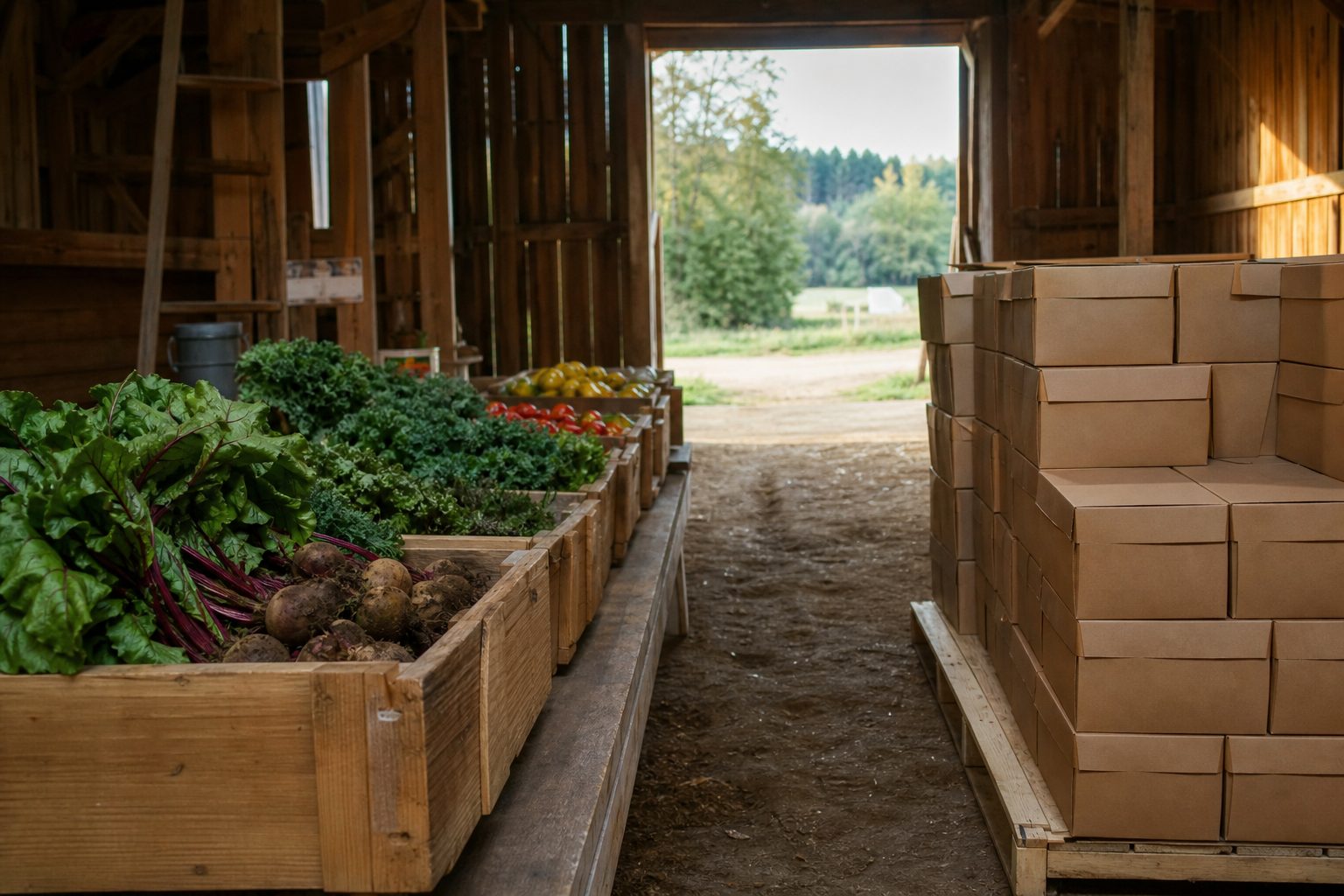
With the fixed box model, each member gets the same box. You decide the contents based on harvest and pack a set number of identical shares. On pickup day, boxes are ready in advance, and most or all the week's harvest for CSA moves out at once. This method makes it easy to plan cooler space. You know what you need to pick, what must be packed, and what should leave the farm by day's end.
Choice Box: Options and Table Displays
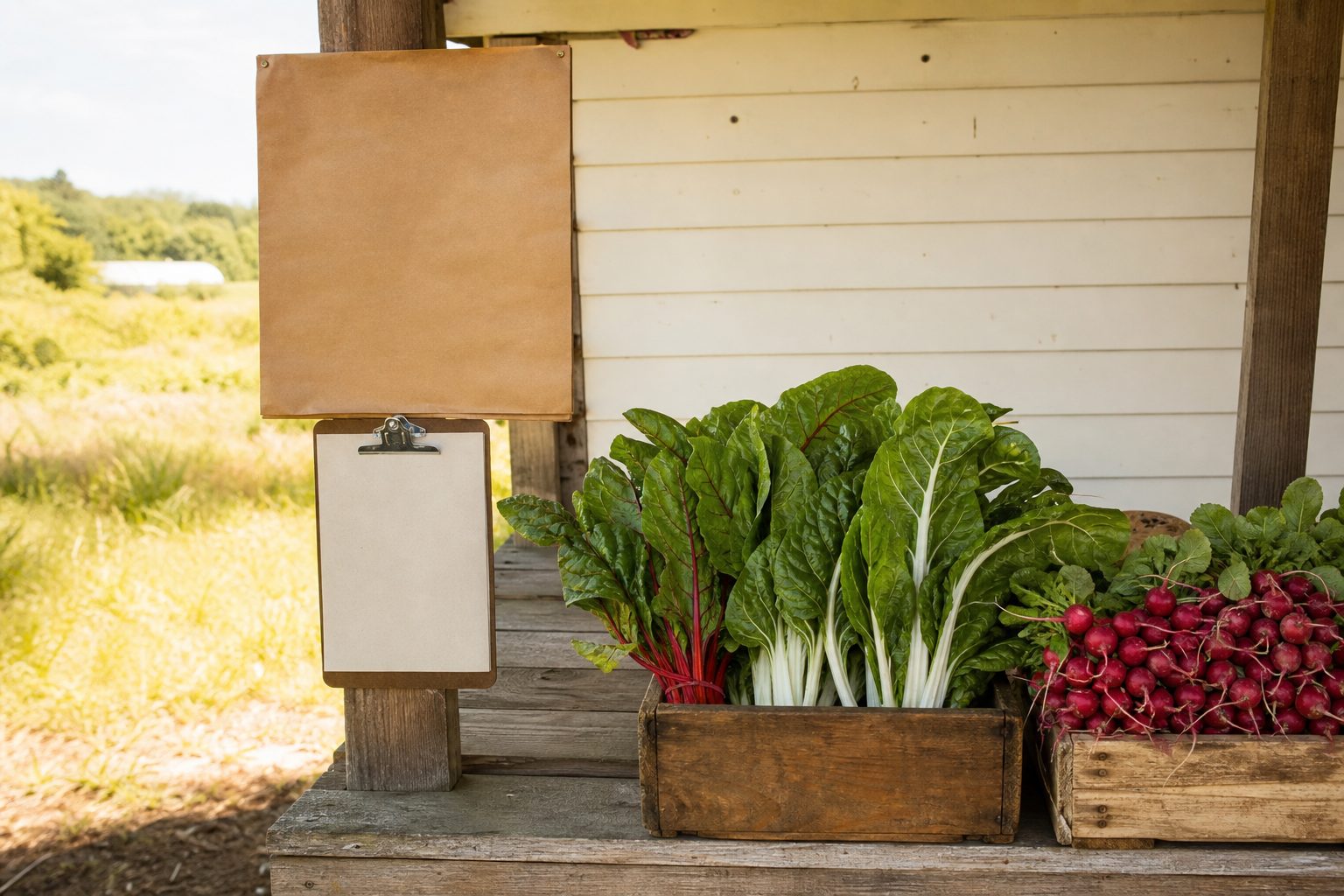
Here, members pick from a selection displayed either on a table or on a customizable list. Each person chooses their own mix, often within certain limits (for example, "choose eight from this group"). This means you need to harvest a buffer above the base share count, since member preferences are hard to predict. Some crops will move quickly, others may linger. Choice models often mean more leftovers and less predictability in daily outflow.
Market Credit: Shop-Style Picking
With market credit accounts, members use prepaid balances to "shop" each week. You harvest and display produce like a mini farmers market, and members take what they want, paying from their account. Outflow depends on each member's choices, and some will skip weeks, buy extra, or change their habits with the seasons. The farm keeps a more varied inventory, and the cooler may hold stock longer between pickups.
Keep reading: The Substitution Mistakes That Drive CSA Members to Cancel
Harvest Day Labor: Pack Lines Versus Staffed Choice Tables
How you assemble boxes or monitor tables affects both labor and workflow. The model you choose sets the rhythm for your harvest day.
Fixed Box: Assembly Lines and Predictable Timing
Packing fixed boxes is straightforward. Crews set up an assembly line, packing identical boxes one after another. Labor is focused and repetitive. The required number of boxes is known ahead, and the process is efficient for teams. This model minimizes time spent debating quantities or substitutions, though you might need to handle a few allergy or preference notes.
Choice Box: Member Interaction and Table Management
Choice setups demand more staff on pickup days. Someone needs to restock tables, check quantities, and answer member questions. If you pre-pack partial boxes and let members fill in the rest, the process takes longer per box. The line moves slower, and there is more opportunity for delays as members make up their minds. You need at least one staffer dedicated to managing the table, and possibly more if you want to enforce limits or answer questions.
Market Credit: Checkout and Inventory Tracking
Market credit requires both staff and systems for checkout. You need someone to monitor the tables, weigh or count items, and deduct purchases from member accounts. Staff may also need to explain prices or handle account questions. The labor model is closer to a small market stand than a pack shed. Inventory tracking must be accurate, since member spending is flexible and produce may sell unevenly.
What Happens to Surplus and Short Crops Under Each Model
Every week brings a mix of bumper crops and shortages. The CSA model you use shapes how you deal with both.
Fixed Box: Spreading Risk and Sharing Surplus
Fixed boxes help spread both feast and famine. If you are short on one crop, you simply leave it out of the box that week. Surpluses can be portioned out evenly, or you can rotate "bonus items" over the season. The downside is that every member gets the same mix, even if some dislike a certain vegetable. Unpopular surplus items may not always be appreciated, but at least they move out with the rest of the box.
Choice Box: Preferences Shape the Leftovers
When members choose, surplus and short crops become more obvious. If everyone skips rutabagas, they pile up. If peas are in short supply, the first pickup gets them and the last goes without. Some farms use a first-come, first-served approach, while others ration limited crops to keep it fair. Choice models can leave the farm with excess produce no one wants, which must be sold elsewhere, donated, or composted.
Market Credit: True Supply and Demand
Market credit models let members buy what they want, and skip what they do not. Surplus crops may linger unless priced to move. When something is in short supply, it may sell out in minutes. You can use price as a lever to encourage movement, but unpopular crops may require promotion or repurposing. The farm bears the risk of wasted inventory if members avoid certain items week after week.
Keep reading: FSMA Produce Safety Rule: Qualified Exemptions for CSA Farms
Member Behavior: Take Rates, No Shows, and Unclaimed Shares
How members interact with your CSA depends on the pickup system. Knowing the patterns can help you plan for waste, reallocation, and communication.
Fixed Box: Highest Consistency, Fewer Surprises
Fixed box CSAs tend to have steady take rates. Members know exactly when and what to pick up. No shows happen, but you can often donate or resell unclaimed boxes. Some farms allow a friend to pick up, or offer a missed box at the next market. Overall, the system is robust against member variation, but you may still need a plan for late pickups or forgotten shares.
Choice Box: Variable Engagement
Choice systems can see both higher satisfaction and more inconsistency. Some members show up early for the best selection, while others miss pickups entirely if they know favorites are out. Unclaimed produce may be harder to redistribute, especially if it has already been handled by multiple people. Clear communication about hours and availability helps, but expect more leftovers and a wider swing in take rates.
Market Credit: Flexible, but Less Predictable
Market credit offers the most freedom. Members can skip weeks or double up when they want. This suits busy schedules but makes it hard to predict weekly turnout. Some members may use credits quickly in summer, then slow down later. Others may let balances ride until the last weeks of the season. Farms need a plan for unused balances and a clear policy for end-of-season credit.
Cash Flow: Prepaid Seasons Versus Running Debit Accounts
The way you collect payment shapes your financial stability through the season. Upfront cash means early investment, while running accounts mean income is spread out.
Fixed Box and Choice Box: Prepaid Model
Both fixed and choice CSAs usually rely on members paying for the season up front. This gives the farm early income for seeds, labor, and other costs. Cash flow is predictable, and the risk of nonpayment is low once the season begins. It also means the farm carries the harvest risk: if there is a crop failure, you have to make it up with other produce or communicate with members about shortages.
Market Credit: Pay-As-You-Go
Market credit accounts may start with an upfront deposit, but members spend at their own pace. Some farms require a minimum account balance, while others let members reload as needed. The farm receives funds as produce moves, which can stretch out cash flow. This model can be appealing to members wary of a large upfront commitment, but it shifts financial risk to the farm. If a member drops out mid-season or does not spend their balance, the farm may not realize expected revenue.
See how CropShareBox handles this for small farms and agriculture
Which Model Fits a 30, 150, and 300 Member Farm
Scale changes what works. The model that fits a small group may not suit a larger operation. Here is how each model fares at different sizes.
30 Members: Flexibility and Direct Interaction
Small farms with thirty members can offer the most personal service. All three models are manageable, but choice and market credit become easier at this scale. You can talk directly with each member, manage preferences by hand, and adjust on the fly. Fixed boxes are simple, but flexibility is less of a burden with fewer people.
150 Members: Efficiency Becomes Critical
At one hundred fifty members, labor and logistics matter more. Fixed boxes shine here for their efficiency. Packing identical boxes streamlines labor, reduces confusion, and speeds up pickup. Choice models are possible, but require well-organized tables and more staff. Market credit needs careful inventory and checkout management, or lines may back up. Automation and good record keeping become important.
300 Members: Scale Demands Consistency
With three hundred members, the need for efficient systems is critical. Fixed box CSAs are easiest to manage at this size, with clear counts and predictable labor. Choice and market credit models can work, but only with strong technology, precise inventory, and enough trained staff to handle the volume. Without tools to manage preferences, substitutions, and accounts, these flexible models can quickly bog down in errors and delays.
Switching Models Between Seasons Without Losing Members
Sometimes, a farm needs to change its CSA model to match growth, member feedback, or shifting labor. Switching models comes with both opportunity and risk.
Communicate Early and Explain the Reasons
Members dislike surprises, especially when it comes to food routines. If you are moving from fixed box to choice, or vice versa, give plenty of notice. Explain the reason: growth, efficiency, or a better fit for your harvest. Share how the new model works and what will change for members.
Test, Survey, and Offer a Trial
If possible, run a pilot or offer side-by-side options for a short period. Some farms let members choose between fixed or choice shares one season, or test market credit with a small group. Feedback from these trials helps guide the full transition. Surveys can also reveal which crops members want more of, or which pickup models suit their lifestyle.
Keep Key Features Familiar
Retain as much continuity as possible. If you switch from fixed to choice, keep the same pickup time and location. If you add a market credit option, keep communication and sign up simple. Consistency helps ease the change and reassures long-term members.
Switching CSA models is easier with tools that manage harvest lists, member notes, substitutions, and flexible pickups. Planning software that ties your harvest to box contents and member preferences can help a farm move between models without losing track of produce or member satisfaction.