The harvest list is a guess
Beds get counted by eye on Monday, then the picking crew comes up 40 bunches short on chard because deer pressure took a row overnight. The box list is already printed.
Roughly $310 a week in emergency market buysCropShareBox turns Monday's harvest walk into Wednesday's pack sheet, so the box list, the member notes and the substitutions all come off the same count of bunches and pounds. Farms running 30 to 300 shares plan the whole week from one screen in the wash pack shed.
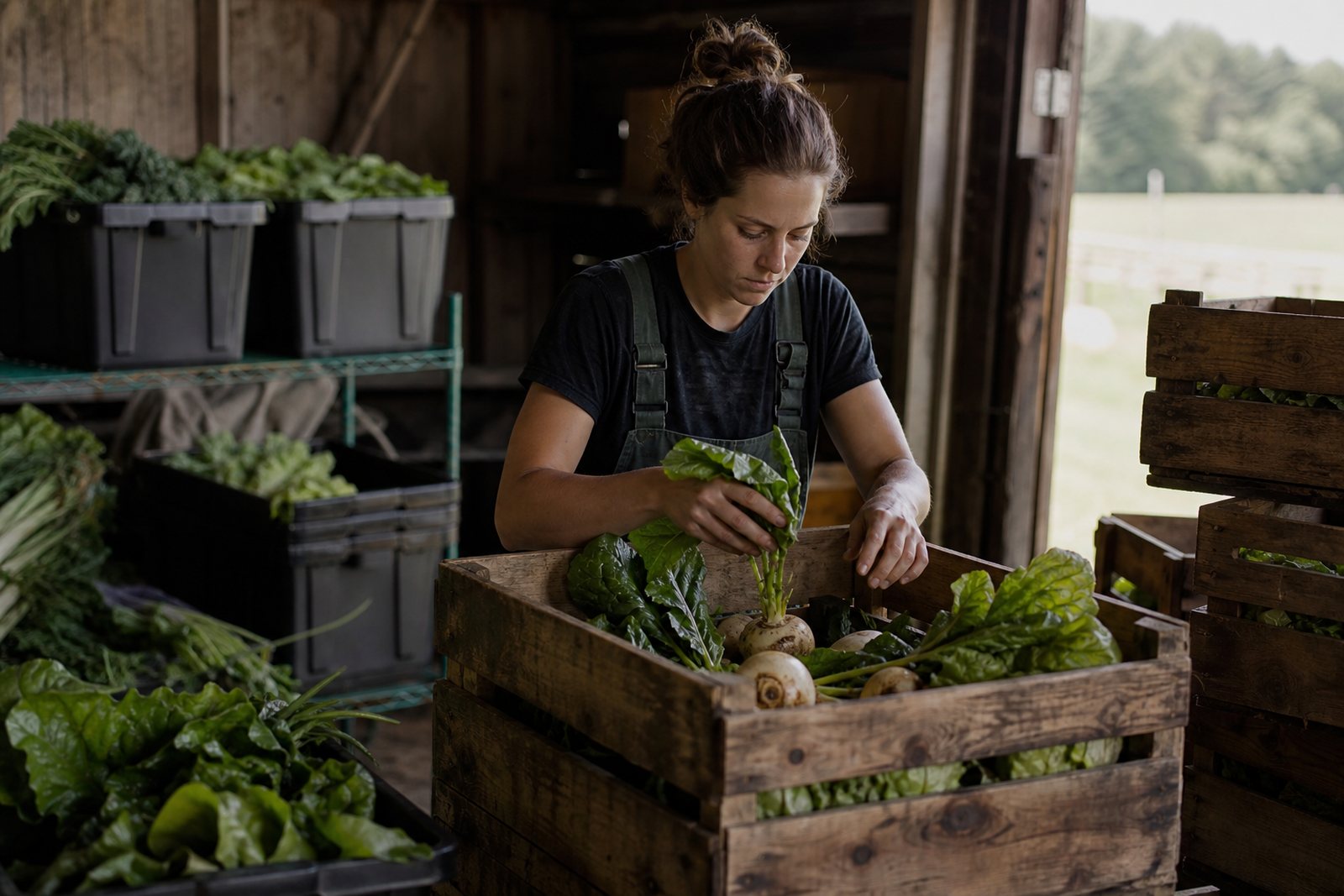
Most CSA weeks fall apart in the gap between what the crew wrote down on Monday and what the crates actually held on Wednesday. Here is what that gap costs a farm with 200 members.
Beds get counted by eye on Monday, then the picking crew comes up 40 bunches short on chard because deer pressure took a row overnight. The box list is already printed.
Roughly $310 a week in emergency market buysThe no cilantro request, the nut allergy and the two week vacation hold are buried in three different email threads. Whoever packs that morning never sees them.
1 in 9 boxes packed wrong at least once a seasonSomeone swaps kohlrabi for the missing kale on box 42 and nobody records it. Two members get the same crop twice in a row and both write in about it.
4 to 6 hours a week of reply and apologyThe newsletter goes out Thursday night, after pickup. Members show up expecting tomatoes in week 9 and leave with a bag of turnips and a bad feeling.
Renewal drops 7 to 11 points by FebruaryCropShareBox follows the order a farm already works in. Nothing here asks you to plan the season in January or to trust a forecast you did not make yourself.
Walk the beds with a phone and enter units: 260 bunches of Lacinato, 190 pounds of Sungold, 84 heads of romaine. Rough counts are fine, the planner works in ranges.
Drag crops into the small and full share until the planner shows every share can be filled. It stops you the moment a crop runs short of the member count.
Allergies, dislikes, holds and add-ons resolve automatically against your substitution list. The planner flags any member it cannot satisfy so a human can decide.
Pack sheets sort by site and tote count, and the member preview goes out the moment you lock the box. Everyone reads the same list you are packing.
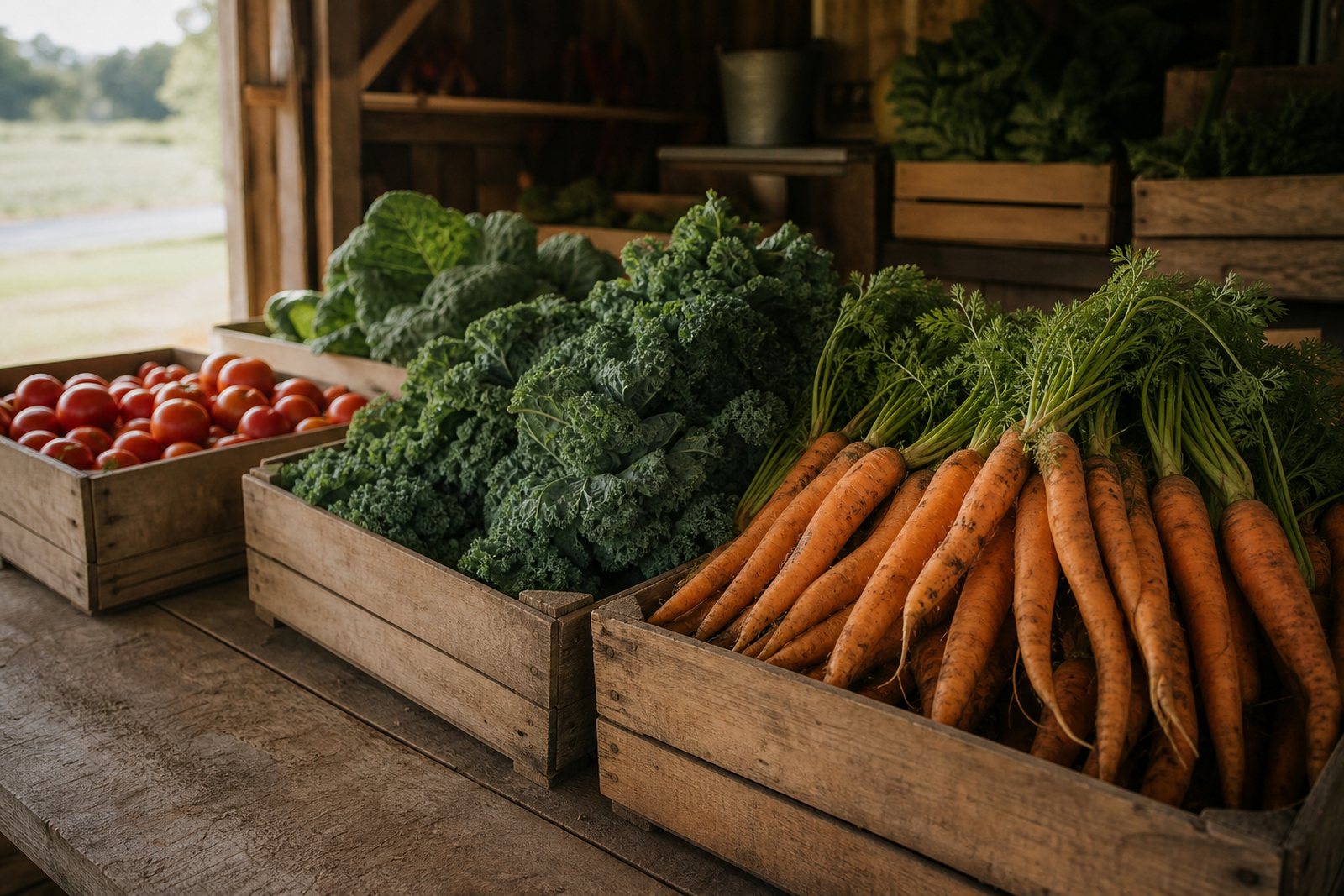
The pack view is one page, big type, and it survives wet hands and bad barn signal. Crew members check off crops as totes fill, and the count on screen drops as they go, so the person at the end of the table knows whether there is enough left for the last route.
This is the rhythm most of our farms settle into by their third week on CropShareBox. The order rarely changes, because it follows the cooler and the truck rather than the software.
The two moves that pay for themselves are locking the box on Monday afternoon instead of Thursday night, and recording the actual pack while the totes are still on the table.
Nothing in CropShareBox exists to look impressive in a screenshot. Each piece removes a specific argument that happens in a packing shed between 6am and noon.
Enter standing counts by crop and unit, in bunches, pounds, pints or heads, straight from the bed. The board carries a low estimate and a high estimate so a wet week does not blow up the plan.
Compose the small share and the full share side by side and watch the planner divide every crop by your live member count. It turns red the second a crop cannot cover the shares you sold.
Every allergy, dislike, hold and delivery instruction lives on the member record and prints on the box label. A new packer sees the same warning your longest crew member would have remembered.
Set what may stand in for what, by weight class and by family, so beets can cover turnips but never cover a salad crop. The planner applies the rules first and only escalates the boxes it cannot solve.
Print by site, by route or by share size, with the exact tote and cooler counts the crew needs to load. Each sheet carries the swap list at the bottom so nobody has to ask what to do with box 42.
Send the list, the storage tips and the swap notes by email or text the moment you lock the plan. Members read what is coming before pickup, which turns most complaint emails into recipe questions.
These are medians from 187 farms that finished the 2024 and 2025 seasons on CropShareBox and shared their season close numbers with us.
Planning, packing lists and member replies collapse into one pass. The saved time comes mostly from not rewriting the box list twice and not answering the same question 30 times.
When the plan is built from real counts, farms stop covering shortfalls with wholesale purchases at retail speed. The median farm in our sample cut emergency buy ins by 71 percent.
Members who get the box preview on Monday renew at a noticeably higher rate. Knowing what is coming, and why kale replaced the broccoli, is most of the trust in a CSA.
Notes print on the label instead of living in an inbox, so allergy and dislike errors nearly stop. The remaining misses are almost always a member who changed a preference on pickup day.
A full share for week 22: ten crops, 218 boxes, three pickup sites, two vacation holds and one no nightshades substitution already applied.
We asked members to describe the part of the week that changed most. None of them mentioned software.
We lost most of a chard planting to a hailstorm on a Tuesday night. By 7am I had rebuilt the full share around bok choy and green beans, the swap note was written once, and 164 members read it before they drove out. Nobody asked me what happened, they told me they were sorry about the hail.
I ran the CSA off a legal pad and a spreadsheet for eleven years and I was not looking to change. What sold me was the shortfall warning. It caught that I was 22 heads of lettuce short for the Thursday route while I still had time to cut more, instead of at 11am with totes on the floor.
Our crew turns over every spring, so the notes used to walk off the farm in someone's head. Now the label prints the nut allergy and the two households that cannot take spicy greens. First season with it, we packed 3,100 boxes and got one preference complaint.
One flat monthly rate, no charge per member and no cut of your share revenue. Run it for the season and turn it off over winter if that suits your operation.
For a market garden running up to 80 shares from a single pickup site.
For a CSA of 80 to 300 shares with several drop sites and a paid crew.
For a collaborative CSA or food hub packing one box from several growers.
Add every packer, driver and site host you need at no extra cost, with view only access for seasonal staff. We never charge by the seat, because a farm crew changes twice a year.
Export members, crops, box plans and yield history to CSV whenever you want, without asking us first. If you leave, you leave with everything you brought and everything you built.
Email support answers within one business day, and pack day faults are worked the same morning at any hour. The person who replies is the person who writes the code.
Every plan is billed monthly in US dollars and can be cancelled at any time from your account, with no notice period and no season minimum. Cancel in October and your data waits for you in March.
Plans are $29, $69 or $139 a month depending on how many shares you run and how many pickup sites you serve. There is no fee per member, no percentage of your share sales, and no separate charge for the crew accounts you add. Text message previews on the Full Farm and Multi Farm plans include 1,500 messages a month, and additional messages are billed at cost. If your share count moves between tiers mid season, we move you and prorate the difference on the next invoice.
Most farms go live between two pack days, which in practice means about three hours of work. You send us your member list as a spreadsheet export, we load it with share sizes, pickup sites and any notes you already track, and you check the first pack sheet against the one you would have written by hand. Crops and units take another hour because you only enter what you are actually harvesting this month. We have onboarded farms in week 3 and in week 19 without a pause in deliveries.
Your member list, notes and harvest history belong to your farm and nobody else. Data is stored on servers in the United States, encrypted at rest and in transit, and it is never sold, rented or used to build a marketing list. You can export everything to CSV at any time without asking us, and if you cancel we hold the account cold for twelve months so a returning farm does not lose its yield history. We do not run advertising trackers inside the application.
CropShareBox is the planning and packing layer, so it sits next to whatever you use to sell shares and take payment rather than replacing it. Member lists import from CSV, and we keep two way syncs with the common CSA sign-up platforms so a new member who joins on Friday is in Wednesday's pack list. Box previews can send through your own email provider so they arrive from your farm address. There is a read only availability feed you can point a farm stand screen or a website widget at.
Yes, and about a third of our farms do exactly that. Cancel from the account screen whenever you like and billing stops at the end of the current month, with no notice period and no season commitment. Your crops, members, notes and yield history stay in place, so restarting in March is a single click rather than a rebuild. Farms that run a winter share simply keep the subscription going year round.
That objection is the reason the product exists. CropShareBox does not ask you to forecast in January, it asks what is standing in the field this week and works in low to high ranges rather than fixed numbers. When a crop fails, you change one line and every affected box, label and member note updates in about a minute, which is the part that used to take an afternoon. Growers with the most unpredictable ground tend to get the most out of it, because rebuilding a plan stops being a punishment.
The Weekly Share is our magazine for CSA growers: the calendar math behind a 22 week season, the box models that decide your harvest day, and the substitution habits that quietly cost you renewals.
 Practical guide
Your share calendar is a promise you make in January and keep in August. Here is how to build it backward from frost dates, days to maturity, and the successions that carry each week.
Read the full report: How to Build a 22 Week CSA Share Calendar From Seeding Dates
 Comparison
Fixed boxes, choice tables, and market credit accounts each move produce differently and each demands a different harvest day. What every model asks of your crew, your cooler, and your cash flow.
Read the full report: Fixed Box vs Choice Box vs Market Credit: Three CSA Models Compared
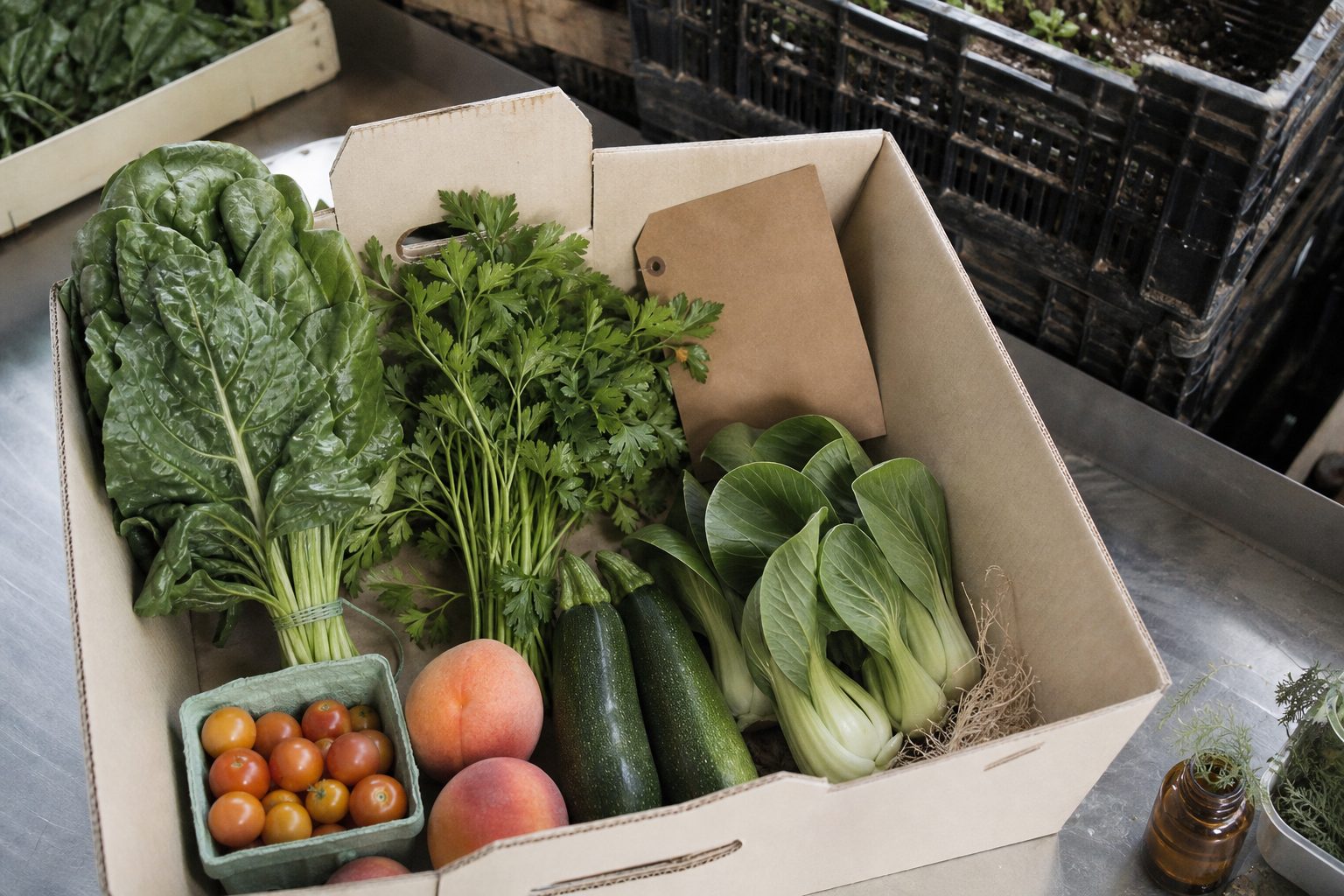 Mistakes to avoid
Most members who quit do not quit over a bad crop. They quit over the swap you made without telling them. The substitution habits that erode renewals, and what to do the week after one lands badly.
Read the full report: The Substitution Mistakes That Drive CSA Members to Cancel
Send the shape of your operation and we will walk one real week of your season through CropShareBox on a screen share: your crops, your share sizes, your drop sites and the two members whose notes always get missed. Thirty minutes, no slide deck, and you keep the pack sheet we build.
No newsletter, no drip sequence, no sales calls from a number you do not recognize. If you would rather write directly, use jimenezjulien42@gmail.com and mention your share count.