What Members Compare Your Box To and Why Retail Value Matters
When a potential member weighs the cost of your CSA share, the first comparison is usually the price of organic produce at local grocers or farmers markets. Many shoppers know the price per pound for staples like carrots, tomatoes, and lettuce. They will mentally add up the likely cost of buying a similar bundle at retail. If the share feels like a bargain, that can make the sale. If it feels expensive, they want to know why.
Retail value is not only about money. Members expect freshness and quality, but also variety and the occasional surprise. Even with a loyal customer base, the perceived dollar value of what goes into each box is a baseline. If a box contains mostly lower-cost staples, be aware that members may compare the cost to sales at the farmers market or the organic section of the grocery store. On the other hand, hard-to-find items and specialty greens can tip the scales in your favor.
Setting a share price without knowing the grocery equivalent is risky. Some farmers pack boxes and then add up what that would cost at the local co-op or supermarket. Others use price sheets from their own market stands. Either way, retail value sets the floor for the conversation with members. It is where many will start before considering your story, your practices, or the support they want to give your farm.
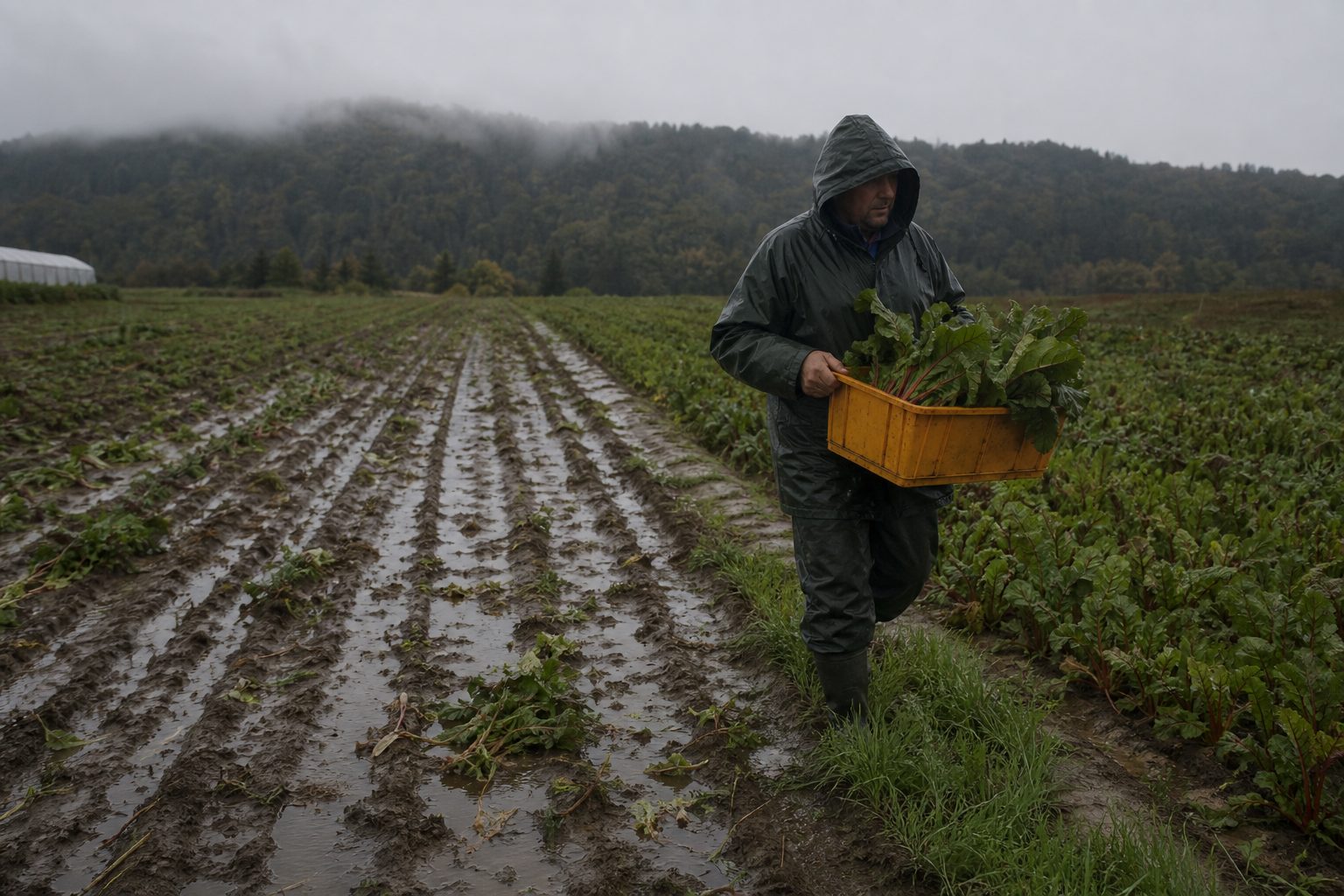
Keep reading: A Rain Week on a CSA Farm: Which Crops Hold and Which Are Lost
Yield Per Hundred Bed Feet for the Crops You Actually Pack
Yield is the first variable in the CSA box equation. Most crop budgets and seed catalogs publish expected yield per hundred bed feet or per row. But your real numbers will depend on your soil, weather, and management. To get an accurate picture, start tracking what leaves the field and what actually goes into boxes, crop by crop.
For example, if you plant 100 bed feet of carrots, you might expect about four to five half-bushel boxes in a good season. But if you lose a third to root fly or split tops, that number falls. Lettuce may yield one to two heads per foot, but post-harvest loss can be significant in a hot year. Tomatoes can swing widely: a hundred feet may yield two crates or five, depending on variety, staking, and disease pressure.
Crop Mix and Seasonality
CSA boxes are not just about total yield, but about a reliable mix. Early season boxes often lean on radishes, salad greens, and spring roots. Later weeks have squash, tomatoes, and melons. Track yields by timing to avoid over-committing to crops that do well in June but leave boxes thin in August. Each hundred bed feet represents not only potential income, but also a slot in the weekly lineup that must be kept full.
Direct Crop Costs: Seed, Transplants, Amendments, and Plastic
After yield, direct costs per crop come next. These are the out-of-pocket expenses required to bring each vegetable from seed to box. Seed cost is easy to track by variety and bed foot. For direct-seeded crops, tally the seed used and the row length planted. For transplants, add up seed tray costs, potting mix, and propane or electricity for the greenhouse if applicable.
Fertility inputs follow. Amendments like compost, pelletized chicken manure, and blood meal go down by the bed. Compost may cost little if made on-farm, but purchased amendments add up quickly, especially for heavy feeders like brassicas. Mulch and row cover, if used, are another line item. Drip tape and plastic mulch can be amortized over their expected lifespan, but must be included somewhere in the budget.
Culling and Losses
Remember to account for culling. If you plant 100 feet of beets but only 80 percent make it to a packable size, your cost per usable beet rises. Pest pressure, weather, and labor bottlenecks all play a role here. Track actual harvest versus what went into the ground, not just the ideal number.
Keep reading: How to Build a 22 Week CSA Share Calendar From Seeding Dates
Labor Minutes Per Box Across Harvest, Wash, and Pack
Labor is often the largest single cost in a CSA operation, and it runs through every step: seeding, transplanting, cultivating, harvesting, washing, packing, and delivery. For pricing, focus on labor from harvest through packing, since that is directly tied to the number of boxes you assemble each week.
Start by timing each harvest. For example, lettuce might take two minutes per head in the field, but washing and spinning could double that. Carrot bunches may move faster, but require more wash time if soils are heavy. Packing boxes often takes less time per box as the crew develops a routine, but the first weeks are always slower.
Tracking Labor With Crew Notes and Logs
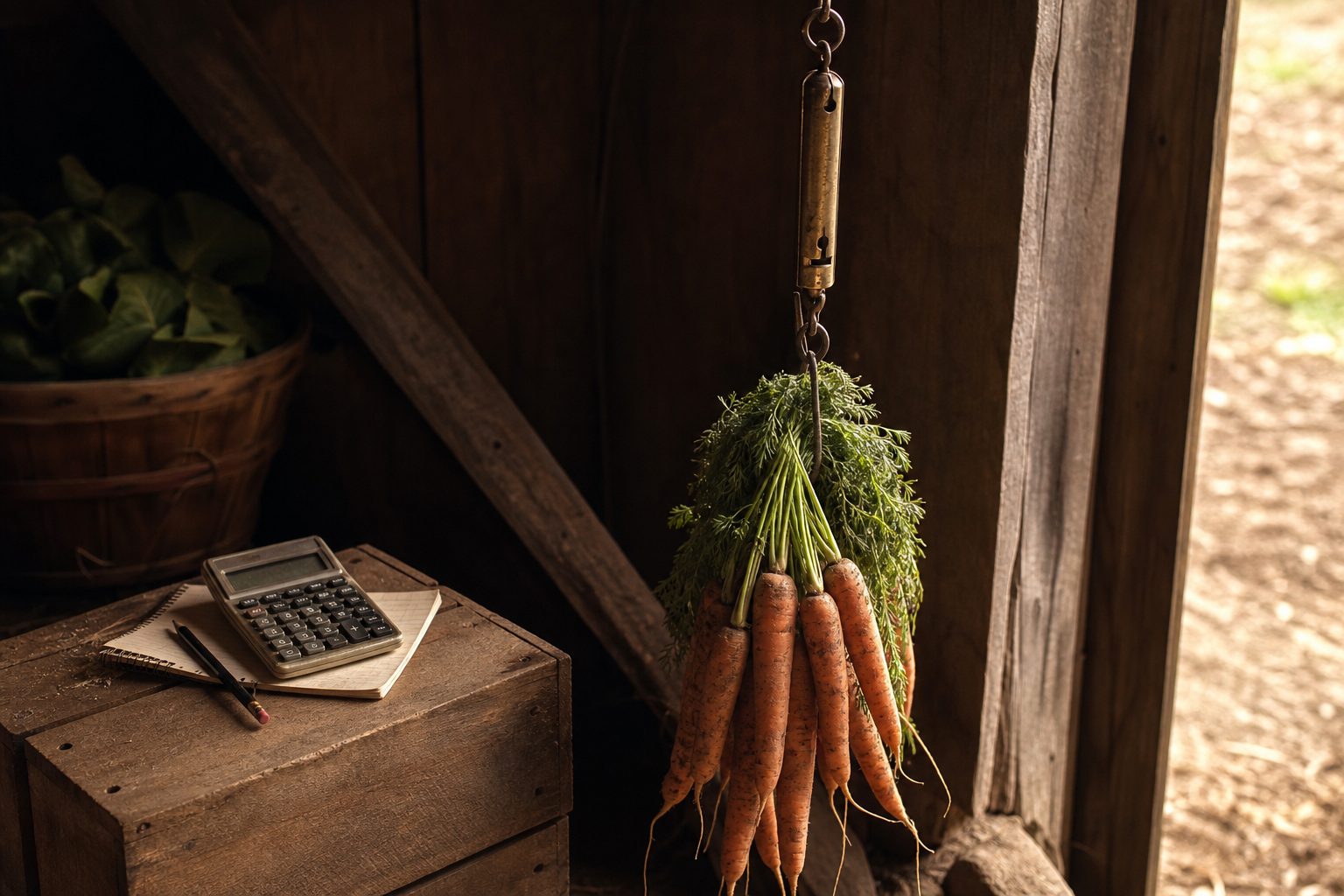
Many growers keep a field notebook or use a whiteboard in the wash area to write down harvest and pack times. Add up these minutes over a few weeks, then divide by the number of boxes packed. You may find that some crops cost twice as much in labor as others, even if seed and input costs are similar. Knowing where your bottlenecks are can help you streamline packing or adjust your crop plan for next year.
Fixed Costs: Land, Cooler, Truck, Insurance, and Site Fees
Fixed costs are the backdrop to your CSA math. These are the expenses that do not change with the number of members, at least in the short term. They include land rent or mortgage, insurance, utilities, and equipment. Most farms also need a walk-in cooler, reliable wash space, and a delivery vehicle. If you use a church or community center as a pickup site, there may be rental or cleaning fees there as well.
Insurance is a requirement in most states when working with the public. General liability, product liability, and sometimes auto insurance must be covered across the season. Add up all annual fixed costs, then divide by the number of weeks in your CSA and the number of members you expect. This gives you a per-box fixed cost that is often overlooked in the excitement of crop planning.
Depreciation and Equipment Replacement
Major equipment like tractors, walk-behind tillers, and delivery vans do not last forever. Estimate how many years of service you expect from each, then divide the purchase price over that period. Even a basic farm truck used only for deliveries has an annual cost that must make its way into your share price. The same goes for cooler compressors and greenhouse heaters.
See how CropShareBox handles this for small farms and agriculture
Setting the Share Price Against Target Retail Value and Margin
With your direct costs, labor, and fixed expenses in hand, you can build the total cost per box. But the share price must also account for your target retail value and the margin you need for reinvestment and risk. Start by adding up the average grocery store value for a typical box throughout your season. Many successful CSAs aim to provide at least the retail value, sometimes with a small bonus to keep members happy.
Next, add up your per-box costs. This includes direct crop costs, average labor minutes priced at a fair wage, and fixed costs per box. The difference between your cost and the share price is your margin. This must be enough to cover surprises: crop failures, extra labor in a wet year, or equipment repairs. If your calculated price is higher than the retail value, consider whether you can add value through farm events, u-pick extras, or specialty items. If it is lower, you may be leaving money on the table.
Box Size and Frequency
Some farms offer small and large shares or biweekly options. Make sure to run the numbers for each. A small share should have a price per box that covers its costs, not just a pro-rated fraction of a large share. Biweekly shares can be tricky, since labor and delivery costs do not always scale neatly.
Break Even Member Count and the Cost of Every Empty Slot
Once you have your per-box cost and share price, you can calculate your break even point. This is the number of members you need to cover all your costs for the season, including your own salary. Add up your total expected expenses, then divide by the net income per member (share price minus per-member costs). This tells you how many full shares you must sell to avoid operating at a loss.
Every empty slot is money lost. If your plan is for 120 shares but you only fill 100, the fixed costs do not go away. Instead, the per-member share of those costs rises. Late sign-ups and payment plans can help, but it is better to set a realistic member count early and adjust your expenses to match.
Handling Overhead and Unfilled Shares
Some farms build in a buffer by targeting breakeven at 90 percent capacity, knowing that a few members will drop out mid-season. Others use a waiting list or rolling signups to keep boxes full. Every empty box is still a box you harvested, washed, and packed for, so track your actual fill rate and adjust future plans to avoid gaps.
Raising the Price Between Seasons Without Losing the Core
Raising share prices is never easy, but it is often necessary with rising costs. The key is clear communication. Long-term members value transparency about why a price is going up: higher labor costs, increased insurance rates, or an investment in a new cooler. Explain where the money goes, and many will understand the need for a modest increase.
Consider timing. Announce price changes in the off-season with plenty of notice. Offer returning members a window to renew at last year's rate, or a small thank you for sticking with you. If you can, add small improvements to the box that members will notice, like more variety, better quality, or new recipes. Avoid large jumps in price unless you are making significant changes to the share size or box contents.
Finally, keep records of member feedback and dropouts. If you lose members after a price increase, try to find out why. Sometimes it is the price, but often it is life changes or moving out of the area. Knowing the true reasons helps you set prices confidently next year.
For many small farms, the complexity of moving numbers from bed feet to box to share price can be daunting. Tools that connect your planned harvest, box packing needs, and member preferences can help keep your CSA on a stable footing and make price setting less of a guessing game.